CBRN-e
Operational Preparedness for Nuclear, Radiological, Biological, Chemical, and Explosive (NRBCE) Risks
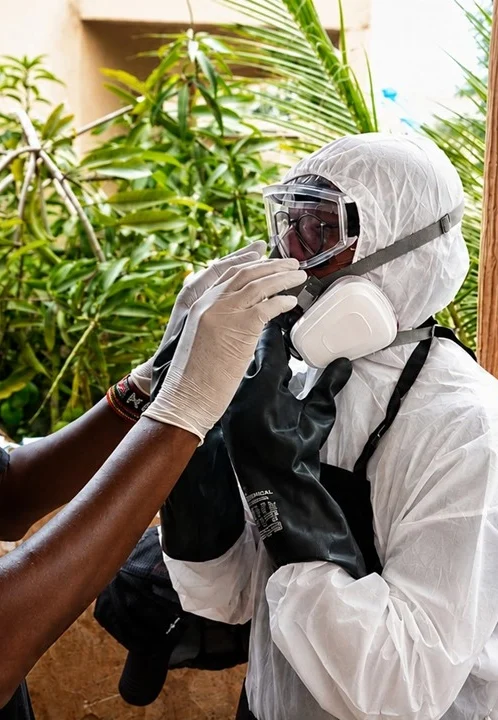
Training to identify threats and respond methodically to CBRN-e risks.
The CBRN-e training course prepares personnel from humanitarian and development organisations, international organisations, businesses, and public-sector bodies to respond to nuclear, radiological, biological, chemical, or associated explosive incidents—without seeking to turn them into specialist response teams.
The initial training course is delivered over two days, allowing participants to progressively acquire the essential knowledge, response skills, and behaviours required when facing a nuclear, radiological, biological, chemical, or explosive threat.
The programme combines focused instruction, case studies, hands-on use of protective equipment, practical exercises, and immersive scenarios. Its aim is to enable non-specialist personnel to identify a potential CBRN-e incident, avoid further exposure, protect people, raise the alarm effectively, and take appropriate action while awaiting specialist response teams.
Scenarios may include a biological or infectious incident, a suspicious substance or package, a chemical spill, a radiological hazard, personnel exposure, a vehicle returning from a suspected contaminated area, or the management of clean and potentially contaminated flows. The AACCES approach combines simple zoning procedures, PPE, immersive simulations, multi-agency coordination and, depending on the setup, XR/VR tools.
A one-day refresher course then allows participants to reinforce previously acquired skills, update their knowledge, practise essential actions and procedures, and respond to new scenarios. It can be adapted to changes in the threat environment, the organisation’s internal procedures, or lessons learned from exercises and operational experience.
Upon request, a four-hour CBRN-e awareness module can also be incorporated into the HEAT programme, following the first-aid module. Designed as an operational extension, it provides the essential response skills needed to identify a potential CBRN-e incident, avoid exposure and secondary contamination, protect teams, and raise the appropriate alert. This awareness module is not a substitute for the two-day initial training course.
Duration
Initial training: 2 days
Refresher training: 1-2 days
HEAT awareness module: 4 hours, upon request
Location
Africa | Europe | Jordan / MENA | Thailand / Southeast Asia | South America | Ukraine
Cost
Price on request
Language
French, English, and other languages depending on the context.
Modules
Understanding the CBRN-E Threat Spectrum and Its Operational Consequences
Chemical and Industrial Hazards: Spills, Fumes, Odours, and Appropriate Response Procedures
Identifying Early Warning Signs and Suspicious Situations
Radiological and Nuclear Hazards: Essential Principles and Operational Limits
Preventing Further Harm: Stop, Keep Your Distance, Avoid Contact, and Protect Yourself
Explosive Hazards: Suspicious Objects or Packages, Do Not Handle, Keep Your Distance, and Raise the Alarm
Basic Zoning and Management of Clean, Suspected Contaminated, and Holding Areas
Protective Measures and PPE: Selection, Limitations, and Avoiding a False Sense of Security
Preventing Secondary Contamination from People, Objects, and Vehicles
Alerting, Reporting, Coordination with Authorities, and Business Continuity
Biological and Infectious Hazards: Exposure, Hygiene, Isolation, and Alert Procedures
Immersive Scenarios, XR/VR Where Available, Debriefing, and Lessons Learned
Upcoming Training Sessions
Our next sessions
No training sessions are currently scheduled.
Please contact us to arrange a two-day initial CBRN-e training course, a one-day refresher course, or, upon request, a four-hour CBRN-e awareness module incorporated into the HEAT programme following first-aid training. Each format is tailored to your risks, exposed personnel, procedures, and operational context.
